Can TMJ Cause Headaches? What Your Jaw Might Be Telling You
Most people don't think to blame their jaw for a headache. You reach for painkillers, cut back on screen time, maybe blame stress — but if your headaches keep circling back to the same spot behind your eyes, temple, or jaw hinge, your temporomandibular joint (TMJ) could be the real source. At Healing Haven Physiotherapy in Edmonton, we regularly see clients who spend months chasing headache relief before realizing their jaw was driving the pain the whole time.
TMJ dysfunction doesn't always announce itself with obvious jaw symptoms first. Sometimes the headache shows up long before the clicking, tightness, or bite changes do — which is exactly why this connection gets missed so often.
What We Cover:
- How Your Jaw and Your Head Are More Connected Than You Think
- Telling TMJ Headaches Apart from Migraines or Tension Headaches
- Why Painkillers Only Mask the Problem
- What a TMJ Physiotherapy Assessment Looks Like
How Your Jaw and Your Head Are More Connected Than You Think
The muscles that move your jaw — the temporalis and masseter — sit directly against your skull, right where many people feel their worst headaches. When these muscles overwork from clenching, grinding, or joint misalignment, they refer pain upward into the temple, behind the eye, or across the side of the head.
→ From a professional standpoint: The jaw joint sits incredibly close to nerves and muscle groups that also feed into head and neck pain patterns, so tension rarely stays contained to the jaw alone.
It's also common for TMJ-related headaches to come with a stiff neck, sore ears, or a jaw that feels "tired" by the end of the day — small clues that are easy to overlook individually.
Telling TMJ Headaches Apart from Migraines or Tension Headaches
Not every headache near the jaw is TMJ-related, so how do you know? A few patterns tend to stand out.
• Timing matters: TMJ headaches often build gradually through the day, especially after talking, chewing, or stressful stretches — rather than arriving suddenly like a migraine.
• Location is a clue: Pain that concentrates at the temple, jaw hinge, or behind one ear (rather than one-sided throbbing typical of migraines) points more toward the jaw.
• Check the jaw itself: Clicking, popping, or a jaw that feels tight or "stuck" alongside the headache is a strong sign the TMJ is involved.
Why Painkillers Only Mask the Problem
It's understandable to reach for over-the-counter medication when a headache hits — but if the underlying cause is joint dysfunction or muscle overuse in the jaw, medication only quiets the symptom while the mechanical problem continues underneath.
→ Recurring headaches that always respond the same way to the same medication, without ever fully resolving, are often a sign that something structural is being missed.
What a TMJ Physiotherapy Assessment Looks Like
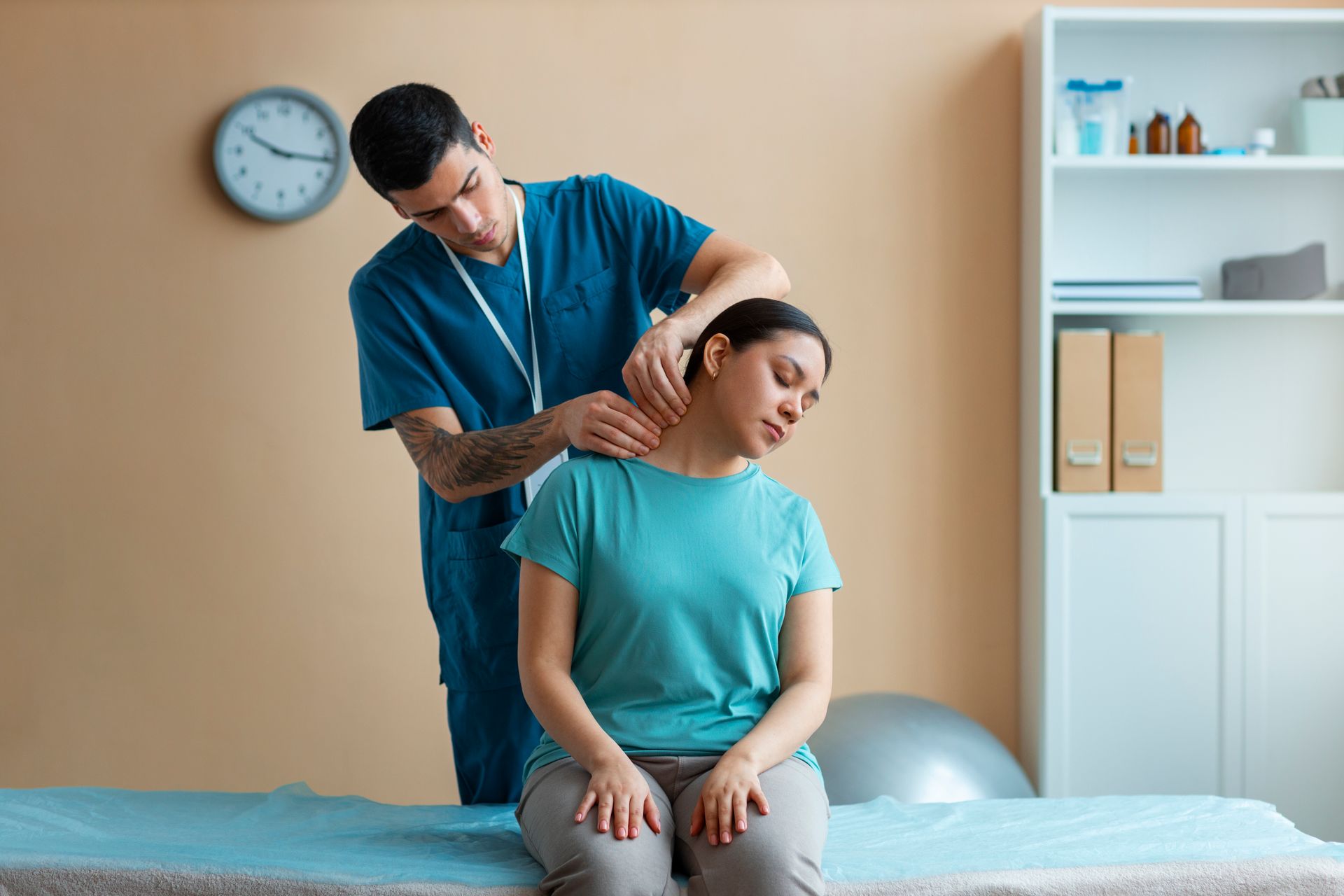
At Healing Haven Physiotherapy, our approach to TMJ-related headaches starts with a full assessment of jaw movement, bite alignment, neck posture, and muscle tension patterns — not just the head pain itself. We look at how the jaw opens and closes, whether movement is symmetrical, and how much tension has built up in the surrounding muscles.
From there, treatment may include manual therapy to release tight jaw and neck muscles, guided jaw exercises, and posture correction, all aimed at addressing the mechanical root rather than just quieting the pain for a few hours.
Find Relief That Actually Lasts
If your headaches keep returning no matter what you try, it may be time to look at your jaw instead of just your head. A proper TMJ assessment can uncover a pattern you didn't know existed and open the door to relief that isn't just temporary. Book an assessment with Healing Haven Physiotherapy in Edmonton and get a clearer answer to what's really behind your headaches.